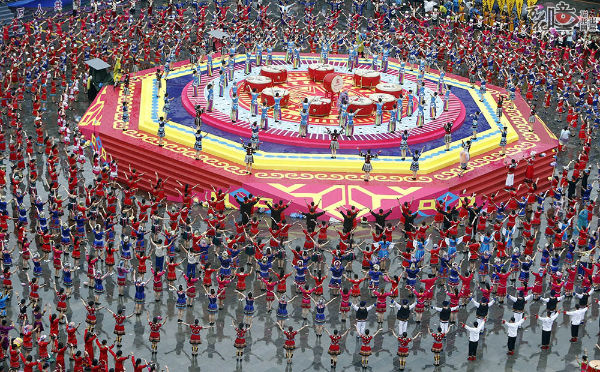
Miao Huashan Festival
Introduction
The Miao Huashan Festival, also known as “Cai Huashan” (Stepping on the Flower Mountain), is the most significant traditional festival of the Miao ethnic group. Celebrated primarily in Miao communities across Yunnan province, this vibrant and culturally rich festival was inscribed on the National List of Intangible Cultural Heritage in China in 2014.
The festival typically takes place between the second and sixth days of the first lunar month, though in some regions, celebrations extend over a longer period. This timing aligns with the traditional Chinese New Year festivities, adding a layer of joy and anticipation to the Miao cultural calendar.
Historical Origins
The Miao Huashan Festival traces its roots to an ancient legend. According to tradition, the festival commemorates the resilience and unity of the Miao people during times of hardship. Long ago, the Miao faced invasion from foreign tribes. Under the leadership of their revered chief, Chiyou, they resisted but were ultimately displaced. To regroup his people, Chiyou erected a tall floral pole on a mountain and summoned them with the melodious sound of a lusheng (a traditional reed pipe instrument). Drawn by the familiar music, Miao people gathered beneath the pole, where they began anew. This symbolic act of reunion and renewal became the foundation of the Huashan Festival, held annually to honor their leader, celebrate resilience, and reaffirm communal bonds.
Key Activities and Traditions
During the Huashan Festival, Miao communities come alive with vibrant activities, centered around a ceremonial "flower pole". The festivities include:
Dances and Music: Traditional dances such as the three-step dance (san bu wu) and foot-stomping dance are performed to the rhythm of lusheng music. Lion dances and bamboo-pole performances add further excitement to the celebrations.
Competitions and Games: Bullfighting competitions draw large crowds, while traditional games such as lusheng contests showcase the participants' skill and artistry.
Singing and Courtship: Young men and women exchange mountain songs in a flirtatious, playful display of wit and talent, often leading to courtship and blossoming relationships.
These activities, infused with joy and camaraderie, serve to preserve and celebrate Miao traditions, while fostering a sense of unity within the community.
Cultural Significance
The Huashan Festival is more than a celebration; it is a vibrant expression of Miao identity, heritage, and collective memory. It embodies the values of honoring ancestors, celebrating heroes, and cherishing communal harmony. The festival's large-scale gatherings, often attended by tens of thousands of participants, create an atmosphere of inclusivity, attracting other ethnic groups and international tourists. This has transformed Huashan into a cultural bridge that connects the Miao people with the wider world.
With its unique blend of historical depth, cultural richness, and dynamic festivities, the Miao Huashan Festival remains an indispensable pillar of Miao cultural heritage and a treasured part of China's intangible cultural legacy.








